Taking Notes In Meetings
When and How to Take Notes in Meetings
Key Tip
Instead of thinking of *notes*, think of *knowledge*. The real question is: when should you capture knowledge in meetings?
The answer: whenever knowledge is of value and requires memory or analysis.
Relying on Others Has Limitations
Depending on others to take notes has drawbacks both immediately and in the future:
Short term: People have different writing speeds and perspectives on what is important. Notes will vary in focus and quality.
For junior colleagues: Deciding what is crucial is even harder without experience.
Long term: Waiting for meeting notes delays your ability to reflect and act.
The Solution
Everyone should capture the knowledge that is relevant to them and their role. By doing so, you show others that you are:
Focused and paying attention
Genuinely interested in what’s being said
Valuing both their time and your own
What to Capture
Use this simple test:
Does the knowledge have value and require either memory or analysis?
If yes, it is worth capturing. The more knowledge you collect, the more you will notice:
Links and connections
Opportunities and risks
Actions that others may miss
Personal Benefits
Capturing knowledge reduces your reliance on memory, which has limits. This lowers stress, improves listening and participation, and expands your working memory beyond just listening or traditional notes.
Real-time access to this knowledge allows you to:
Ask insightful questions
Make stronger observations
Take better informed actions
Unique Opportunity
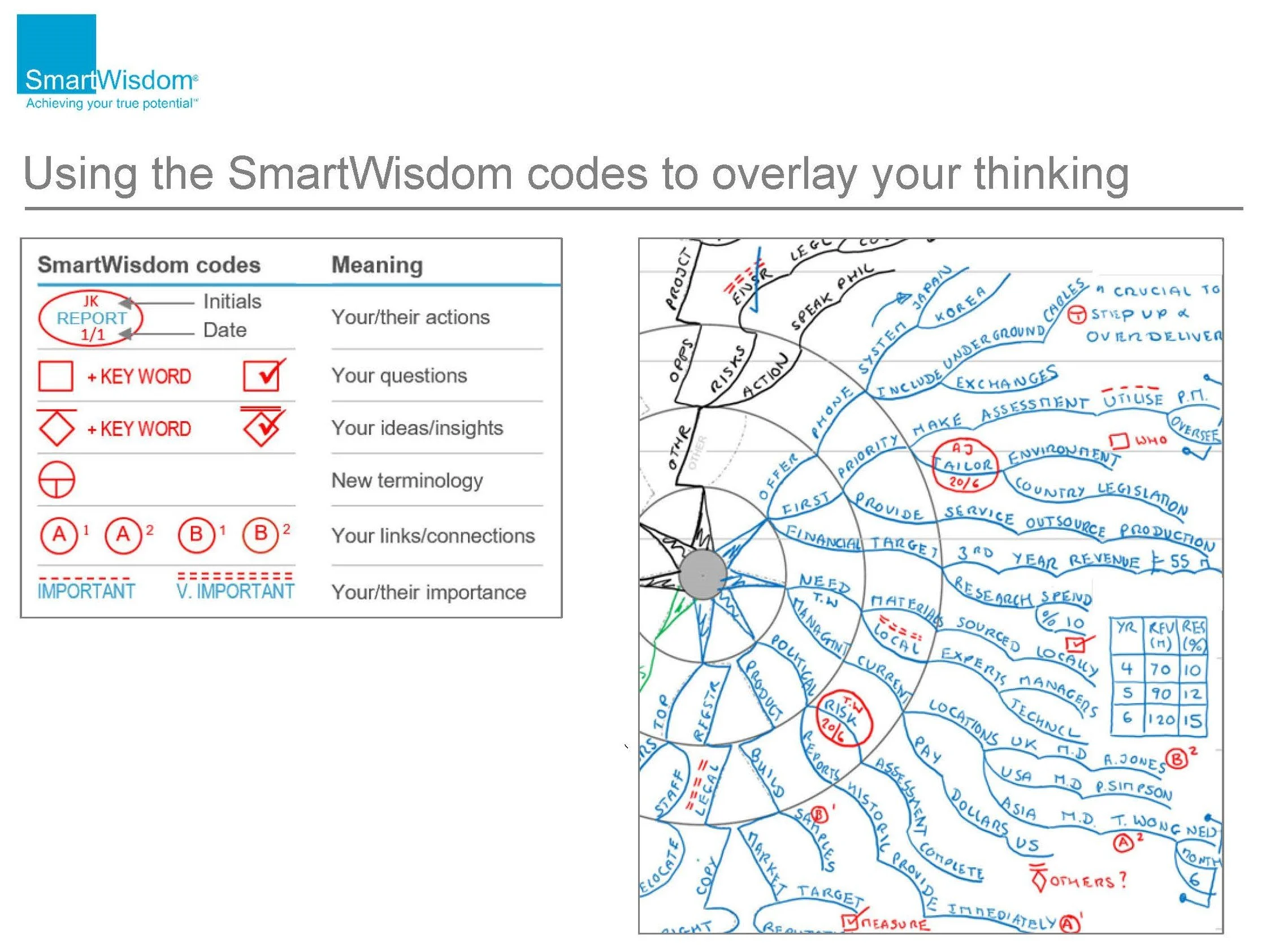
With SmartWisdom, you can capture unique and often fleeting knowledge, such as:
Questions to ask
Thoughts and ideas
Links you spot
Useful terminology
Levels of importance
Actions
These fragile thoughts may vanish quickly if not captured. SmartWisdom allows you to work on two levels:
Managing and harvesting your own knowledge
Simultaneously capturing and processing the knowledge of others